
Reclaiming Alignment: How the Posturific Posture Corrector Helps Improve Your Stance
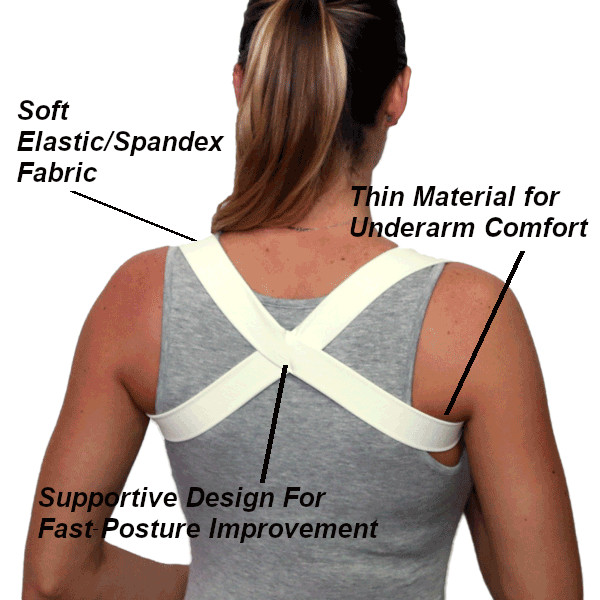
In today’s digital world, where many hours are spent hunched over desks or mobile devices, poor posture has become a widespread issue.1 This habitual slouching can lead to a host of problems, from chronic back and neck pain to tension headaches and decreased energy.2 For those looking to combat these issues, devices like the Posturific Posture Corrector offer a simple, non-invasive way to guide the body back toward proper alignment.
The Posturific corrector, often featuring a lightweight, figure-eight design, is built on a core principle of proprioception—the body’s awareness of its position in space. It doesn’t just passively hold you in place; rather, it works as a sensory cue and training tool to help you become actively aware of when your posture is slipping.
How Posturific Supports Better Posture
Unlike bulky back braces, the Posturific corrector typically focuses on the upper back and shoulders. Here is how it helps facilitate improvement:
- Gentle Physical Correction: The design includes straps that loop around the shoulders and cross over the back. When you begin to slouch, the gentle tension of the brace pulls your shoulders back and down, which naturally encourages your neck and upper spine to align properly. This immediate, slight physical resistance serves as a constant, yet subtle, reminder to maintain an upright position.
- Building Muscle Memory: The most crucial function of the Posturific corrector is to help retrain your muscles. Poor posture is essentially a bad habit—your body’s muscles have adapted to a slouched position.3 By wearing the corrector for short, consistent periods, you repeatedly expose your muscles to what good posture feels like.4 Over time (often cited as 30–45 days of consistent use), this repeated exposure helps your body build muscle memory, making the correct alignment feel natural even when the device is off.5
- Alleviating Strain and Pain: By guiding the body into its natural neutral position, the Posturific corrector helps reduce the excessive strain placed on the muscles, ligaments, and joints that are overworked during slouching. Correct alignment reduces pressure on the spine, which can help mitigate the likelihood of neck, shoulder, and upper back pain, as well as tension headaches.6
Tips for Optimal Results
Experts agree that posture correctors are most effective when used as a temporary training aid, not a permanent crutch.7 To maximize the benefits of the Posturific Posture Corrector, users are advised to:
- Use it in Moderation: Most recommendations suggest wearing a corrector for limited periods—often 15 minutes to a couple of hours per day.8 Wearing it too long can cause your muscles to become dependent on the support and potentially weaken them.9
- Combine with Active Posture and Exercise: The corrector is a great reminder, but lasting change requires active effort.10 Pair its use with exercises that strengthen the core and back muscles (like planks and rows) and regular stretching to address underlying muscle imbalances.
- Ensure a Proper Fit: An adjustable design, which Posturific generally offers, is essential. The device should provide firm support and a constant reminder without being so tight that it restricts movement or causes discomfort.11
By providing consistent, non-intrusive feedback, the Posturific Posture Corrector empowers individuals to take control of their alignment. It serves as an invaluable tool for interrupting the cycle of slouching and developing the muscle memory needed to stand taller, breathe easier, and enjoy the full-body benefits of good posture.